


FAQs
Stone crab claws should be eaten within 1-2 days for the best quality and superior taste. When you order them from Stone Crab, they will arrive cooked and ready to be enjoyed within 48 hours. They'll taste even better if you eat them the same day the package arrives.
The number of crab claws in a pound varies, depending upon the size of claws ordered. Here is a guideline:
- Colossal: 2 claws per pound
- Jumbo: 3-4 claws per pound
- Large: 4 - 5 claws per pound
- Select: 6-7 claws per pound
- Medium: 7-8 claws per pound
See the guideline above regarding the estimated number of claws in each pound of the size you wish to order. The number of pounds of each size ordered determines the approximate number of claws in the package.
Stone crab claws get bruised by sea urchin spines when the crabs crack sea urchin shells to eat them. The spots may not be attractive. But they do not harm the stone crab meat.
Shipping is calculated at online checkout. The cost will depend upon the overall weight of each order and the destination.
When your stone crab order arrives, unpack the claws and rinse them under cold water. Place them in a bowl on top of a layer of ice. Then place a layer of ice on top. Place the bowl in the refrigerator. Drain the bowl and add more ice the next morning if you haven't been able to eat them the first day. It is best to serve the stone crabs within 48 hours of their arrival. The claws should not be cracked until you're ready to eat them.
We will cook your stone crabs before we ship them. They are cooked in our production facility the day they are caught. When you receive them, yes, they're pre-cooked and ready to dip in the delicious mustard sauce we include in your package.
Stone crab season is from October 15 each year until the next May. Florida state law ensures that stone crabs continue to thrive in the surrounding ocean. If you order them out of season, you will receive crabs frozen at the peak of freshness.
Fishers carefully catch stone crabs in traps and inspect them to ensure they meet the legal requirements for harvesting. Then, after removing the claw, the stone crab is dropped back into the ocean, where it will continue to live and thrive.
When scuba and snorkel harvesting, you must not use any gear that can crush or puncture the crab's body. You must also only collect up to a gallon of stone crab claws per day, with only two gallons aboard your boat at any time.
A stone crab's claw is measured from the bend in its claw to the tip of the claw. This is referred to as the propodus, and it must be at least 2 7/8" to be harvested.
It is illegal to harvest claws from an ovigerous female (a female with eggs). Fishers turn stone crabs upside down to ensure they don't have a sponge containing eggs on their undersides. If a sponge is seen, the crab is carefully placed back into the water.
Female stone crabs have a wide, round abdomen, while a male's abdomen is much longer and narrower.
Many people often ask, "Do stone crab claws grow back?" and the answer is, "yes!" Typically, it takes an adult stone crab about a year to regenerate its claw, while younger stone crabs can regenerate claws within a few months.
Survival depends on three factors: Whether the diaphragm at the base of the claw joint is damaged Whether the stone crab has lost one or two claws The age of the stone crab
Stone crabs that have lost both claws have to learn to become scavengers that can hide from predators. Since they no longer have claws, these stone crabs aren't able to easily feed or defend themselves, making them more vulnerable to predators.
Carefully extend the stone crab's claw away from its body to see a fingerprint-like mark inside. If it is unbroken, it is an original claw. If the mark has dashes, it has likely been regenerated.
Male stone crabs live up to seven or eight years, and females live up to eight or nine years.
Stone Crab season requires claw-cracking expertise; luckily, it is not difficult. Simply use a mallet or the back of a spoon to tap the claw along the knuckles carefully. Then use your hands to pull away pieces of the shell to reveal the meat inside.
If untracked, your stone crabs will last up to 48 hours. We recommend eating them the day you get them to get the best flavor.
Leftover claws can be stored in an open container and kept in the coldest part of your refrigerator. Or they may be kept in a cooler containing ice. Drain the water and add more ice periodically. Consume within 48 hours of the time you received them.
Stone Crab owns two fish houses in the Florida Keys that are supplied with fresh seafood daily. Our fishers operate over 40 boats to catch the best fish, lobsters, and crabs that we handle from catch to customer sale, so you can be certain they're of the highest quality. When it's Stone Crab season, we provide the best stone crab claws in the country.
No. Fresh stone crab claws have a clean, mild ocean aroma. A strong or unpleasant odor is not typical and usually indicates improper storage or age. Spoiled claws will usually have a smell of ammonia. Properly handled claws should smell fresh and slightly sweet.
Your claws are meant to be enjoyed within a few days of delivery for freshness. They can last 3-4 days in the refrigerator. Freezing them is an option if you just can’t eat them within 48 hours. While you may lose some of the quality and flavors, if you do it properly they can still be enjoyed up to 6 months later.
Cool them in the refrigerator for 6-8 hours. Place them in a freezer safe bag and put in the freezer. When you are ready to eat them, do the similar in reverse. Place then in the refrigerator for about 12-24 hours to thaw SLOWLY. Then enjoy them.
Stone crab claws are traditionally served chilled, cracked, and paired with mustard sauce. They are also excellent alongside lemon wedges, coleslaw, or a light salad. No reheating is necessary or recommended because it could cause the meat to be chewy or rubbery. If you want to have them warm, place them in warm water or steam them quickly, the longer they heat the tougher they will get.
Yes. Stone crab meat is naturally low in fat, high in protein, and contains essential minerals such as zinc and selenium. It is a clean, lean seafood choice when enjoyed in moderation.
Stone crab claws are shellfish and may cause allergic reactions in individuals with shellfish allergies. If you have a known shellfish allergy, consult a healthcare professional before consuming.
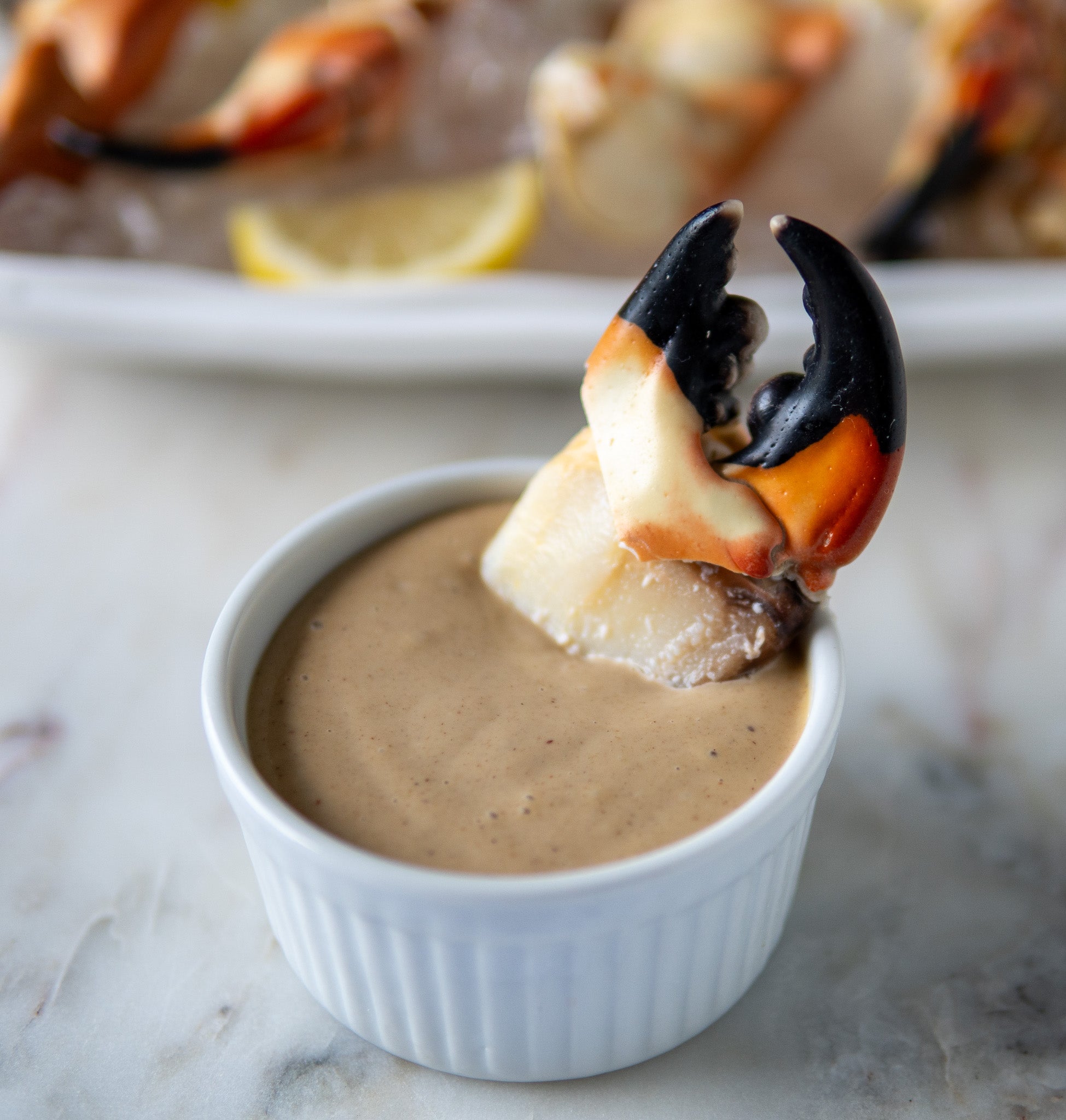
Yes. Each stone crab order includes traditional mustard sauce, which complements the natural sweetness of the meat. The sauce is packaged separately to ensure freshness during transit.
Yes. Stone crab harvesting is considered one of the most sustainable seafood practices in the U.S. Only the claws are legally removed, and the crab is returned alive to the ocean, where it can regenerate its claws over time. Strict Florida regulations, including size limits, seasonal harvesting, and protections for egg-bearing females, help ensure healthy crab populations and long-term sustainability.
If you’re new to stone crab, many customers prefer Large or Jumbo claws. They offer a generous amount of meat without being overwhelming and are easy to crack and enjoy. Colossal claws are ideal for special occasions or experienced stone crab lovers.
Yes. Stone crab claws make an excellent gourmet gift. Orders arrive carefully packed to maintain freshness and can be shipped directly to the recipient. Many customers choose to send stone crab for holidays, birthdays, or special celebrations.
No special tools are required - however we do include a cracking mallet with every order. A small mallet, nutcracker, or even the back of a spoon works well. The claws are pre-cooked and easy to crack, making them suitable for both casual meals and elegant gatherings.
Stone crab meat is known for its firm texture and naturally sweet flavor, which sets it apart from other crabs. Because the claws are harvested at peak season and cooked fresh, the taste is clean, rich, and highly distinctive.
Absolutely. Stone crab claws are often served at celebrations, dinner parties, and upscale gatherings. Their presentation, flavor, and seasonal availability make them a premium seafood choice for memorable occasions.


